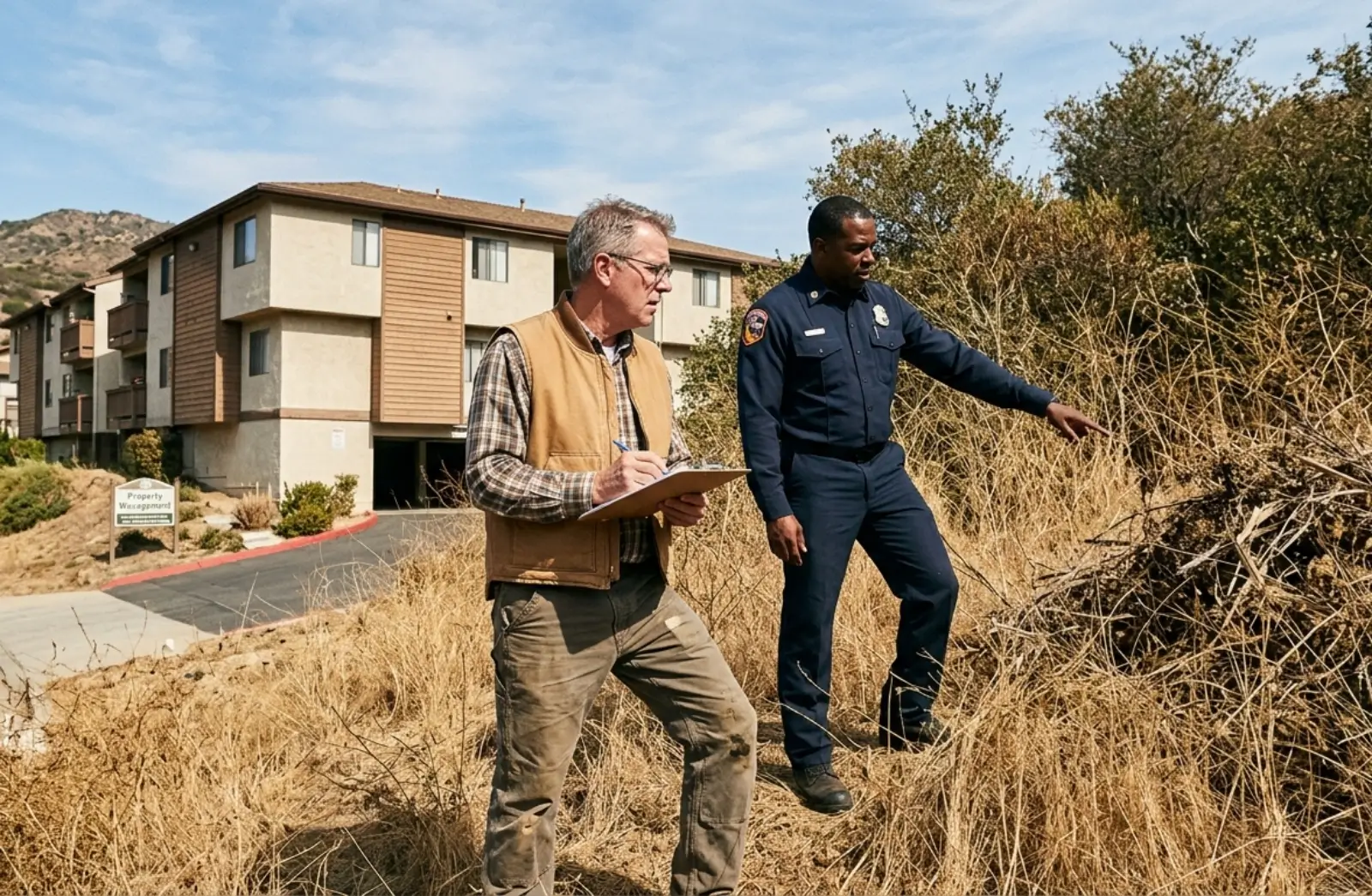
Temecula's rolling hills, oak woodlands, and proximity to open wildland make it one of the most desirable places to own rental property in Southern California, but those qualities can also leave you vulnerable to disasters like wildfires.
Many of the homes in the area are within some degree of wildfire risk, which is why it’s crucial to check where your rental property is positioned. A wildfire can result in months of lost rental income, expensive repairs, liability issues, and unhappy tenants.
You can prevent or reduce risk by adopting certain practices or investing in upgrades that strengthen your property’s structure. Here’s what you can do.
Key Highlights:
- Defensible space works in zones. Clearing vegetation in three distinct zones around your home, from the first 5 feet out to 100 feet, is one of the most effective ways to keep fire from reaching the structure.
- Zone 0 deserves special attention. The 5 feet closest to your home should be as ember-resistant as possible, using hardscape instead of mulch and keeping the area free of combustible debris and furniture.
- Structural hardening matters as much as landscaping. A Class A fire-rated roof, mesh-covered vents, dual-pane windows, and fire-resistant decking all reduce the odds of ember ignition.
- Insurance coverage needs regular review. Confirm your policy includes full rebuild cost coverage, loss-of-rent protection, and adequate liability, since wildfire risk models and premiums shift often.
- Tenant education closes the gap. Clear evacuation plans, fire safety habits, and proper use of fire extinguishers help protect the property even when you're not on-site.
1. Create and Maintain a Defensible Space
A defensible space is the buffer zone between your main structure and surrounding vegetation. It can be the most effective way to prevent fire from reaching the main building. California law requires property owners in high-risk zones to maintain at least 100 feet of defensible space where feasible.
Defensible spaces are divided into 3 zones:
Zone 0
This represents the first 5 feet from your home. Property owners are urged to make it ember-resistant to prevent materials from igniting. You can do that by:
- Using hardscape like gravel, pavers, or concrete, and avoiding combustible bark or mulch.
- Removing dead or dying plants, weeds, and debris from your roof, gutter, deck, porch, stairways, and under any areas of your home.
- Removing branches within 20 feet of any chimney or stovetop outlet.
- Limiting combustible items, like outdoor furniture, on top of your decks.
- Relocating your firewood or lumber to Zone 2.
- Replacing combustible fences, gates, and arbors attached to your home with noncombustible alternatives.
Zone 1
This is the 30-foot mark where you are advised to remove all dead plants, grass, weeds, dry leaves, and pine needles. Trim the trees regularly and create a separation between trees, shrubs, and items that could catch fire. Upkeep can be tiresome since this zone covers a wide area, but keeping it clean can also add to your rental property’s curb appeal.
Zone 2
At this point, you need to reduce potential fuel within 100 feet. You can do that by:
- Cutting or mowing annual grass down to a maximum height of 4 inches.
- Creating a horizontal and vertical space between grass, shrubs, and trees.
- Removing fallen leaves, needles, twigs, bark, cones, and small branches in the area.
- Keeping 10 feet of clearance around exposed wood piles down to bare mineral soil in all directions.
- Keep 10 feet of clearance to bare mineral soil and no flammable vegetation for an additional 10 feet around the exterior of outbuildings and propane tanks.
2. Harden the Structure
Even with proper defensible space maintenance, you still need to ensure your main structure can withstand a potential fire or embers brought by wind. A few upgrades can go a long way, like replacing wood shake roofing with Class A fire-rated materials like composition shingles, metal, or tile.
Install metal mesh in areas where flammable debris can accumulate, like gutters, vents, and crawlspaces. Upgrade to dual-pane, tempered glass windows to help keep fire out.
If you can, avoid combustible siding materials, use fire-resistant decking, or maintain a clear zone under decks and porches. These small changes can save your property from damage that can cost significantly more.
3. Review Your Insurance Coverage Carefully
California's insurance market has tightened considerably in high-risk wildfire areas, and since this can protect you from high costs of rebuilding or fixing damage, you need to make sure your policy explicitly includes the following:
- Dwelling Coverage: Sufficient to fully rebuild at current construction costs instead of the property’s market value.
- Loss of Rent Coverage: Reimbursement for rental income lost when the rental property becomes uninhabitable.
- Liability Coverage: For when the fire originated from your property and caused harm to neighboring properties.
Shop your policy annually, since wildfire risk models and premiums change frequently. Ask your insurance agent whether certain upgrades to reduce wildfire risks can help you qualify for insurance premium discounts.
4. Educate Your Tenants
Your residents also play a role in wildfire safety, whether they realize it or not. Provide an action plan in your welcome packet covering evacuation plans, local emergency alert sign-ups, emergency contacts, and where they can view real-time fire information during red flag warning days.
Educate your tenants on fire safety, such as putting out grills before leaving, turning off outdoor heaters before heading inside, and using fire extinguishers properly if a fire occurs inside or outside the rental property.
FAQs
How much defensible space am I actually required to maintain?
California law calls for up to 100 feet of defensible space in high-risk zones where feasible, broken into Zone 0, Zone 1, and Zone 2, each with its own clearing and maintenance standards.
What is Zone 0, and why does it get special treatment?
Zone 0 is the 5 feet immediately surrounding your home. Because it's the area most likely to catch embers that then ignite the structure itself, it calls for hardscape instead of mulch and a strict limit on combustible items like furniture or firewood.
Do roof and vent upgrades really make a difference?
Yes. Most homes lost in wildfires ignite from wind-blown embers rather than direct flame contact, so a Class A fire-rated roof and mesh-covered vents, gutters, and crawlspaces meaningfully cut down that risk.
An Extra Layer of Protection: Professional Property Management
Between maintaining three separate defensible space zones, keeping up with structural hardening, reviewing insurance coverage every year, and making sure tenants understand fire safety, protecting a Temecula rental property from wildfire is a year-round responsibility.
Hiring a professional like Temecula Property Management can help you stay ahead of your tasks and gain valuable insights to better protect your rental business. With regular maintenance and general property upkeep, you can significantly reduce your wildfire risks.
Feel free to reach out to us, and we can explain how our services can benefit your business.
More Resources:
Discover the Charm of Temecula: A Hidden Gem in Southern California
How to Find a Good Property Manager for Your Temecula Rental Property